

I’ll be honest; this may be my final blog for a while. Why? The main reason is that unless you promote your work constantly, which also means writing constantly, people don’t read it. And the trend now is to watch YouTube clips. People want visuals as well as good content.

It’s like my time keeps getting sucked into a black hole. And it’s all my fault. Unstructured time can be like that. If you are a writer, you need to structure your time. Stephen King locks himself away in his room all morning and writes. Kazuo Ishiguro locked himself in his room twelve hours each day for four weeks to complete The Remains of the Day, the 1989 Booker Prize winner. They both were deeply focused on one task. So, in this blog, I will be reviewing the nonfiction book Deep Work by Cal Newport, published by Piatkus (2016). The subtitle on the cover is: Rules for Focused Success in a Distracted World. Cal Newport is a professor of computer science at MIT. He defines Deep Work: Professional activities performed in a state of distraction-free concentration that push your cognitive capabilities to their limit. These efforts create new value, improve your skill and are hard to replicate. On page 209, he has a section titled: Don’t use the internet to entertain yourself. Because isn’t that (the internet) the biggest time waster ever invented? And aren’t our days constantly saturated with internet (“Google”) searches? Not to mention e-mails. More on that later.
How does anyone ever get the time to complete serious work??

I guess it all comes down to: 1. How you set your work goals and 2. How you knuckle down and complete them. It’s this discipline in a distracted world that I find the most difficult to stick to. Shorts on youTube, Netflix and other platforms compete for our attention at the click of a button.
It never used to be like this! (Old-school alert!)

Personally, to be honest, I prefer, not creatively speaking, to go to a day job where all your duties are laid out and distractions are absent or at least minimised. The main distraction is other colleagues and the innate human condition to communicate. I love having a good chin wag with other teachers. Don’t we all! But writing is a singularly isolating job. A job where you not only have to focus your creativity on the page but it must also be distraction-free. And fiction writing is the hardest, top of the pile the long novel beast, without doubt! The main reason it took me over three years to write The Formula of Memory was the distractions. I was too weak to ignore them. (spoiler alert: watch this space for publication details)
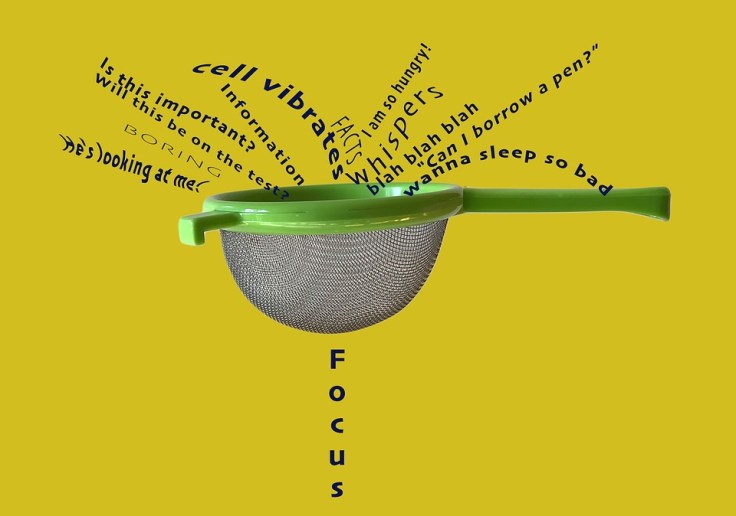
But I digress. Did you see what I just did? I was supposed to reviewing the text Deep Work and I digressed to how easy distractions can hook you. Sorry.
I’ll summarise the section on a troublesome distraction that plagues any professionals. E-mails! How can you manage the ever-increasing e-mails and remain focused on deep work? Cal Newport suggests you add a filter, a “sender filter” with every e-mail you reply to : “I’ll only respond to those proposals that are a good match for my schedule and interests.” (p244)
Personally, during 2014, 2015 I found this annoying trend of e-mail overkill rearing it’s ugly head in education. Head teachers and others seeking promotion would often send out emails at all hours of the day and night, including weekends. Presumably to impress others with their “work ethic”. I believe this behaviour had the opposite effect; I call it the “get a life” attitude. My respect for these people decreased. I receive a lot of emails, I ignore most of them. “The ability to concentrate is a skill that gets valuable things done.” The book explains Bill Gates’ approach to writing the BASIC code for the first Altair personal computer in 1974. He wrote it over three months without a break. Colleagues would find him asleep at his computer, only waking up to continue where he left off. That’s Deep Work!

In conclusion, we need to take back our precious time if we seriously want to complete challenging projects. Locking yourself in a room for twelve hours for four weeks, as Kazuo Ishiguro did to write a novel, seems extreme, but it worked for him.
Thanks for reading.
My next blog, unless it is a video courtesy of youTube, will be about innovative teaching techniques I’ve dreamed up, (some I’ve actually taken for a test drive) and how combining English with other subjects is beneficial, if just an class ice-breaker. (Not too bad for a science-trained teacher?)

 WordWheelsWrites from the author Christopher Williams
Leave a comment