
February 2023 Blog
Another year, another mountain of blank pages to fill… That’s a mixed metaphor—you usually have to climb mountains. I’d rather avoid them, unless…
In this blog, I’d like to present and analysis of the two latest books I’ve read that deal with something critically important to me. Nature. More specifically how the loss of species impacts us, me, as a human species.
The two books are The Overstory by the American author Richard Powers and The Living Sea of Waking Dreams by the Australian author Richard Flanagan. Both deal with how the loss of species in a figurative way, impacts humans, with Richard Flanagan’s use of the specific allegory of the characters losing actual body parts to convey a deeper meaning to the story.
But first, the analysis of The Overstory:
Richard Powers’ novel “The Overstory” is a work of epic proportions that explores the relationships between humans and nature. The story follows the lives of nine different individuals, each with a unique connection to trees, as they navigate the changing landscape of the natural world. The novel is a multi-layered exploration of the intricacies of human and environmental interdependence, and it explores themes such as the value of nature, our responsibility to protect it, and the ways in which our lives are entangled with the lives of other beings.
The book is structured in a way that invites the reader to reflect on the interconnectedness of life, and the narrative weaves together the stories of the characters in a way that highlights the ways in which their lives are intertwined. The characters are all deeply flawed and struggling with their own personal demons, yet they are united by a common passion for trees and a deep sense of awe and respect for the natural world.
One of the central ideas in the book is that trees are not just inanimate objects, but complex living organisms that have their own stories and histories. Powers uses this idea to create a powerful metaphor for the complexity and interconnectedness of all life, and the novel challenges the reader to consider their own relationship to the natural world.
Overall, “The Overstory” is a thought-provoking and profound meditation on the relationship between humans and nature. Through its complex characters and intricate narrative structure, it invites the reader to reflect on their own place in the world and the responsibility we all share to protect and preserve the natural world.
Okay, sounds pretty good doesn’t it? Except, I didn’t write any of that. An AI program called ChatGPT wrote all that. All I entered into the query box was the question: write a 200 word analysis of the novel The Overstory by Richard Powers.
Where does that leave us writers and our creative writing projects? Can we just let a smart AI write for us? What if you are a journalist, say, and your copy editor is hassling you for a finished article/opinion piece? You have a one-hour deadline. Last night, you celebrated your fortieth with a little too much bubbly. Your brain is foggy. Solution: bring up ChatGPT or it’s cousin Sudowrite, type in the headline and parameters of your “story”, hit enter, and in less that a minute out scrolls the finished product. Change a bit here and there, put in a few more emotive words, and there’s the complete story.
Is this the direction of writing? In New York state, the Education Department has banned the use of ChatGPT (and GPT3) from its schools. The University of Newcastle has just sent out a memo to its staff with a similar message. BUT, this kind of technology is spreading, and fast. You are already in AI land heads deep, every time you search on Google.
Just as fast are the species disappearing. I personally think that the analysis of The Overstory is pretty damn good. In fact, I typed the question out twice, and it wrote a completely different (and equally as good) overall analysis of the novel in 200 words.
What the AI didn’t mention was the difficulty in reading such a complex book, with multiple story lines and characters. In fact, the writing and different settings were so complex I didn’t finish the book (almost did, before the library threatened to fine me). It was an exhausting, but immensely intriguing book, so much so that the judges gave it the Pulitzer Prize in 2019.
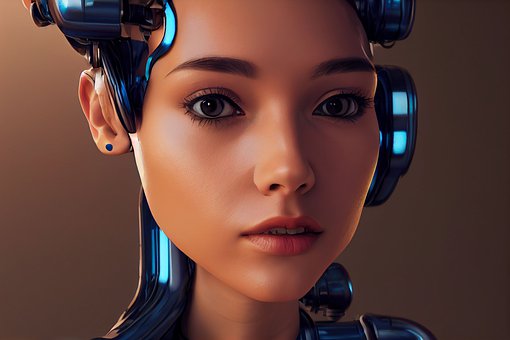
(all images courtesy of Pixabay)
Richard Flanagan’s book is easier to read, basically, it follows the protagonist Anna as her mother is dying and parts of her body (finger, hand, knee) disappear. (She can still move around so the “disappearance” is only a symbolic metaphor to the seriousness of loss of species, and their habitat especially after the massive bushfires of 2019-2020. Thrown in, which doesn’t cloud or confuse the overall theme is the long-lasting effects of child sexual abuse at the hands of the religious(read “Catholic”) priests and Brothers. This is a minor thread through the book but Flanagan keeps coming back to it in reference to one of the protagonist’s brothers, Tommy. Maybe this was included as the secret trial of Cardinal George Pell was unfolding (for detail, the book Fallen by Lucie Morris-Marr is an excellent summary of this matter). Was the abhorrent crimes and behaviour of these religious just another symptom of our divorce, as human beings from nature? And our mostly lack of concern with species extinction? So, what do we do? Well, some smart computer whizz-kids invent AI programs where we can all just make it up, live in a fantasy world? Think Google→ search. AI is now embedded in our daily lives. What do you think?
As I’m not a regular user of twitter or Instagram, please sed me an e-mail if you’d like to comment on this post, to: wooborachris@yahoo.com.au
Next blog: I’ll try for an analysis of Peter Garrett’s memoir Big Blue Sky.
Happy writing!
Christopher.
 WordWheelsWrites from the author Christopher Williams
Leave a comment